Our speciality
Hydropneumatic (HYPN) panels
Steady water pressure on every floor. Our HYPN panels run booster pumps on pressure, share duty between them, and with VFD control hold one set pressure while using less power.

- Hydropneumatic (HYPN) panels
- VFD constant pressure
- Booster pump panels
- Duty, assist and standby
- Dry-run protection
- Pump control panels
- Fire fighting panels
- PCC and MCC
- APFC panels
- PLC and SCADA
- HVAC panels
- Smart IIoT panels
How it works
How does a hydropneumatic (HYPN) system work?
A hydropneumatic (HYPN) system keeps water pressure steady in a building. Booster pumps push water from the sump into a header with a pressure vessel, a pressure transmitter reads the header pressure, and the HYPN panel starts, stops or speeds up the pumps to hold the set pressure. It has five parts, and the panel is the brain that ties them together.
- SumpThe pumps draw water from the sump or underground tank. Level switches stop them if it runs dry.
- Booster pumpsTwo or three pumps work as duty, assist and standby, and take turns so they wear evenly.
- Pressure vesselA pressurised tank on the header covers small demands, so a pump does not start for every tap.
- Pressure transmitterIt reads the header pressure all the time and sends it to the panel.
- HYPN panelIt starts, stops and speeds up the pumps to hold the set pressure, and protects every motor.
- Every floorThe building gets steady pressure, from the lowest flat to the top floor.
What we build
HYPN panels we make
HYPN panels are also called booster pump panels or pressure booster panels. We build four kinds.
VFD constant-pressure panels
One drive per pump, or one drive with cascade control. A pressure transmitter feeds the drive so the pressure stays at the set point as taps open and close.
Fixed-speed HYPN panels
Pumps cut in and out on pressure switches or a transmitter, with a pressure vessel to cover small demands. Simple, rugged and low cost.
Duty, assist and standby panels
Two, three or more pumps that rotate duty, bring in an assist pump at peak demand and start the standby if a pump trips.
Booster panel upgrades
Replacement panels for old booster sets, adding VFD control, a pressure transmitter and monitoring to pumps already on site.
Fixed speed or VFD
Why most new buildings choose VFD
Both keep water flowing. The difference shows in the pressure at the tap and in the power bill.
Fixed speed
Pumps switch on at the cut-in pressure and off at cut-out. Simple and low cost, and best where demand is steady.
VFD constant pressure
The drive speeds the pump up and down to hold one set pressure. Smoother supply, fewer starts and lower power use when demand varies.
| Fixed speed | VFD constant pressure | |
|---|---|---|
| How the pumps run | On at the cut-in pressure and off at cut-out, at full speed | The drive speeds the pump up and down to hold one set pressure |
| Pressure at the tap | Swings between the cut-in and cut-out pressures | Stays close to the set pressure |
| Pump starts | A start each time the pressure falls to cut-in | Fewer starts, so less wear on pumps and motors |
| Power use | Full speed whenever a pump runs | Lower when demand changes through the day |
| First cost | Lower. Simple and rugged | Higher, paid back through power savings where demand varies |
| Best for | Steady demand | Changing demand, as in residential towers, hotels and hospitals |
Inside the panel
Built to run unattended
Booster pumps run day and night with nobody watching, so every HYPN panel is built for clear status, safe changeover and early protection.
- Pressure transmitter input with set, cut-in and cut-out pressures you can adjust
- Duty rotation so pumps share running hours
- Assist pump at peak demand, and the standby starts if a pump trips
- Dry-run protection from sump level switches
- Phase failure, overload and short-circuit protection for each pump
- Auto, off and manual selectors, run and trip lamps, and current meters
- Potential-free contacts for BMS, and remote monitoring as an option

From our shop
Pump and motor panels we have built
Select a photo to see it full size.
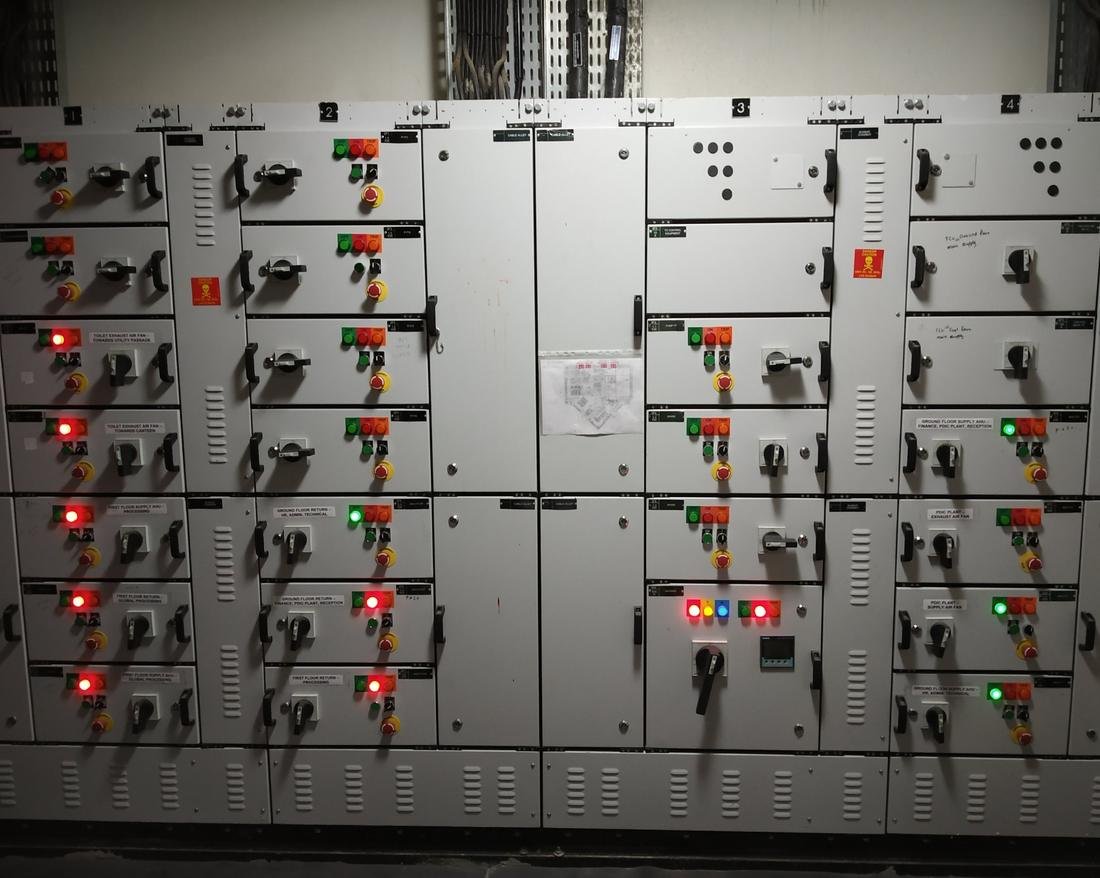
MCC for AHUs, fans and pumps
Labelled feeders with on, off and trip lamps, isolators and emergency stops.
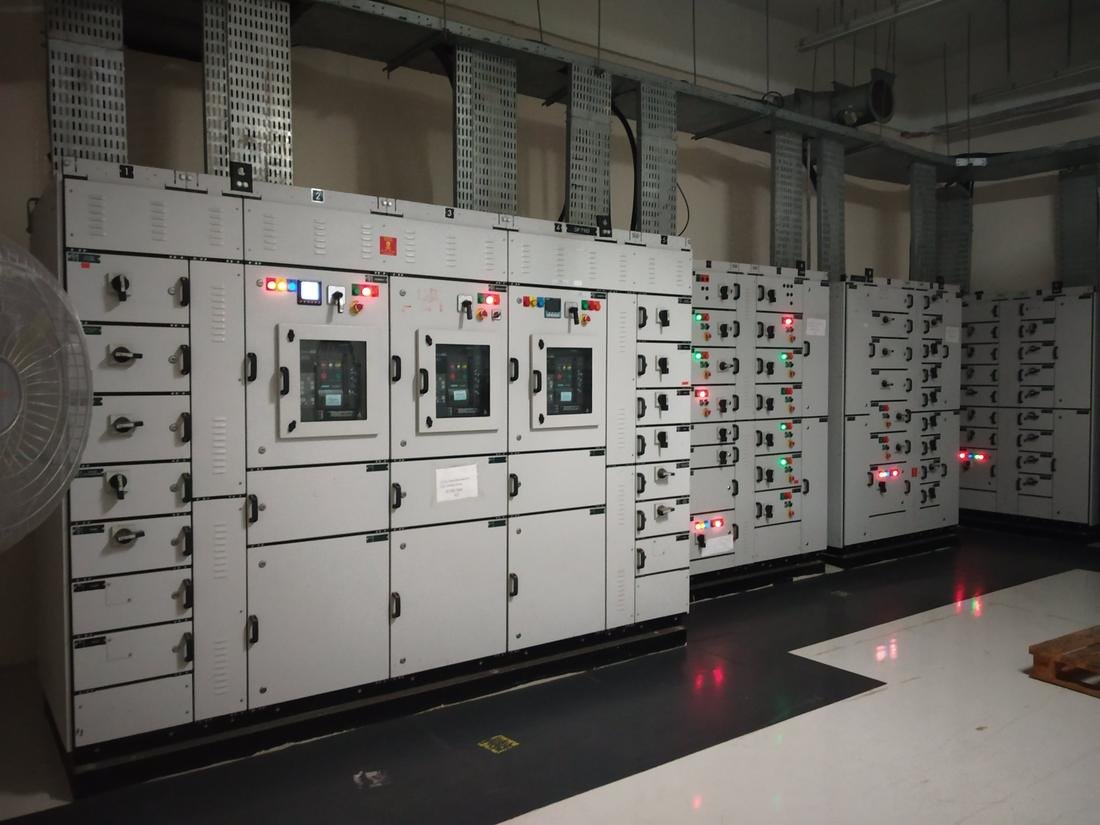
Power and motor control panels
Incomers, metering and many motor feeders in one multi-section board.
Where they’re used
Buildings and sites we build these for
Make it a smart HYPN panel
See pressure, pump status and alarms from anywhere, with SMS or app alerts for faults and trips.
Questions and answers
Questions about HYPN panels
What is a hydropneumatic (HYPN) system?
A set of booster pumps, a pressure vessel and a control panel that keeps water pressure steady in a building. The panel reads the pressure from a transmitter and starts, stops or speeds up the pumps to match demand.
Do I need VFD control?
Not always. Fixed-speed control is simple and suits steady demand. VFD control holds one set pressure, cuts pump starts and saves power where demand changes through the day, as in residential towers, hotels and hospitals.
How many pumps does a HYPN system need?
Most systems use two or three pumps, for example one working and one standby, or two working and one standby. The pump supplier or consultant sizes the pumps, and we build the panel to match.
What protection does the panel include?
Dry-run protection from sump level switches, phase failure, overload and short-circuit protection for each pump, and alarms for low or high pressure.
Can you upgrade an old booster panel to VFD?
Yes. We build replacement panels that add VFD control and a pressure transmitter to an existing booster set, and support the setup at site.
Can we monitor a HYPN system remotely?
Yes. With an IIoT-enabled panel you see pressure, pump status and alarms on a dashboard, and get SMS or app alerts for faults and trips.
Get a quote
Get a price for your HYPN panel
Send what you have, even if it is only a few lines. We reply with questions, a drawing and a price.
For a quick quote, send
- Number of pumps and the kW of each
- Working and standby arrangement
- Required pressure, or the number of floors
- VFD or fixed speed, and remote monitoring if needed
- Site location and timeline